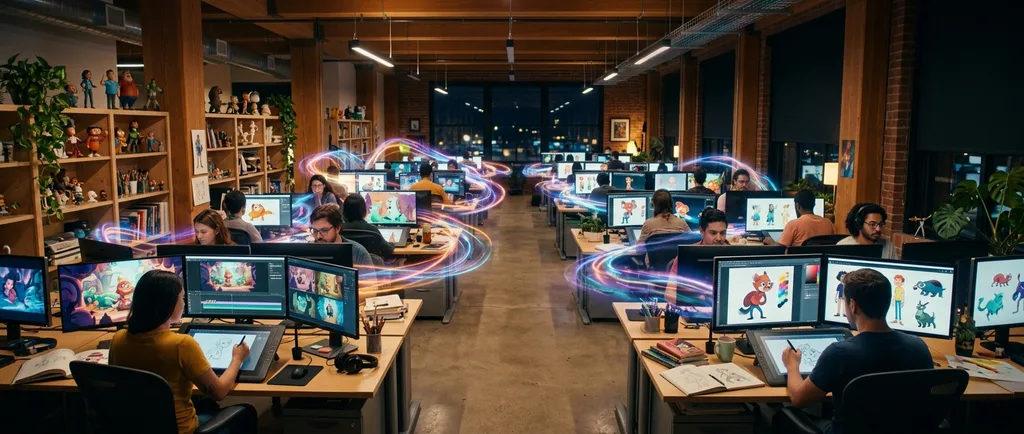
AI Animation: How Artificial Intelligence Is Transforming the Art of Animated Storytelling
AI animation is reshaping how animated films and TV shows are made, from automated in-betweening and background generation to fully AI-generated short films, bringing new creative possibilities and important ethical questions to the industry.
AI Animation: How Artificial Intelligence Is Transforming the Art of Animated Storytelling
Animation has always been a craft that lives at the intersection of art and technology. From hand-drawn cel animation to computer-generated imagery, every generation of filmmakers has embraced new tools to push what moving images can achieve. Today, artificial intelligence is driving the most significant shift the industry has seen in decades. AI animation is no longer a distant concept reserved for research labs — it is actively reshaping how studios, independent creators, and streaming platforms produce animated content.
Whether you are a curious viewer, an aspiring animator, or a seasoned professional trying to make sense of a fast-moving landscape, understanding what AI animation actually means — and what it does not mean — is essential. This article breaks down the key technologies, real-world applications, creative opportunities, and legitimate concerns that define the field right now.
What Is AI Animation?
At its core, AI animation refers to the use of machine learning models and other artificial intelligence techniques to automate, assist, or entirely generate animated visuals, motion, and characters. The term covers a surprisingly wide range of tools and workflows, from software that automatically in-betweens frames in a hand-drawn sequence, to generative video models that can produce seconds of stylized animation from a simple text prompt.
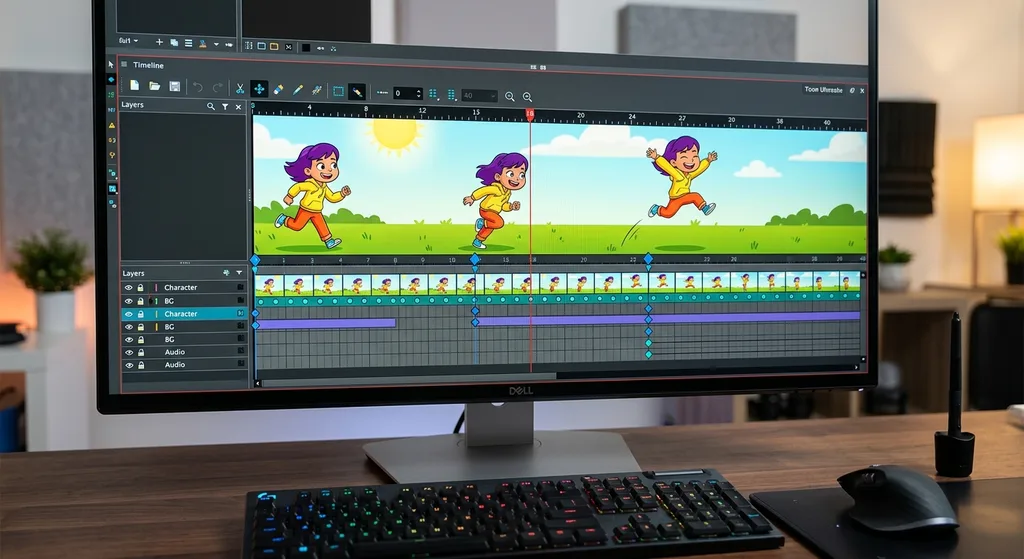
It helps to think of AI animation not as a single technology but as a family of capabilities. Some tools focus on motion synthesis, generating realistic character movement without requiring a human animator to draw or rig every frame. Others specialize in style transfer, applying the visual aesthetic of a reference artwork to new footage or existing animation. More recent text-to-video models attempt to generate animation sequences directly from written descriptions, compressing a pipeline that once took months of work into a matter of minutes.
None of these tools are perfect replacements for skilled human artists, but each one changes the economics and creative possibilities of animated production in meaningful ways.
The Technologies Powering AI Animation
Several distinct branches of AI research feed into modern animation tools, and understanding them helps clarify what each tool is actually doing.
- Diffusion Models: These generative models, which underpin tools like Stable Diffusion and many commercial video generators, learn to produce images or video frames by gradually denoising random noise into coherent visuals. When applied to animation, diffusion models can generate frame sequences that maintain a consistent style, though keeping characters visually consistent across many frames remains an active research challenge.
- Generative Adversarial Networks (GANs): GANs pit two neural networks against each other — a generator and a discriminator — to produce increasingly convincing imagery. Early AI animation experiments, including some style-transfer filters used in short films, relied heavily on GAN architectures.
- Large Language Models (LLMs) and Multimodal Models: The same large models that power conversational AI are increasingly used to interpret creative briefs, write storyboards, and generate scene-level animation directions that downstream tools can execute. This creates a more narrative-aware layer on top of visual generation.
- Neural Rendering and NeRFs: Neural Radiance Fields allow AI systems to reconstruct three-dimensional scenes from two-dimensional images, opening new possibilities for animating environments and characters without traditional 3D modeling pipelines.
- Motion Capture Enhancement: AI systems can clean up raw motion capture data, fill in gaps, and even generate plausible motion data from video of ordinary human movement, dramatically reducing the cost of realistic character animation.
How Studios and Streaming Platforms Are Using AI Animation
Major studios and streaming services have been exploring AI-assisted animation longer than most public announcements suggest. Several areas have seen meaningful adoption.
Pre-production and storyboarding is one of the earliest stages to benefit. AI image generators allow directors and writers to quickly visualize concepts, test color palettes, and iterate on character designs without commissioning full illustration rounds. This does not eliminate the concept artist, but it compresses early-stage exploration significantly.
In-betweening and cleanup are traditionally some of the most labor-intensive parts of 2D animation. Several software companies now offer AI-powered in-betweening, where the system automatically generates the frames between two keyframes drawn by a human artist. The results still require review, but the time savings on a feature-length production can be substantial.
Dubbing and lip-sync is another growing application. AI tools can reanimate a character's mouth movements to match a new language dub, eliminating the awkward mismatch audiences notice when watching international animated content. Streaming platforms distributing animated series across dozens of markets have a clear commercial interest in this capability.
Background generation is an area where AI has proven particularly useful. Detailed environment art is expensive and time-consuming to produce. AI tools trained on appropriate art styles can generate background variations and extensions that match a production's look, freeing human artists to focus on the more expressive foreground work.
Independent Creators and the Democratization of Animation
Perhaps the most culturally significant effect of AI animation tools is what they make possible outside of large studio systems. Animation has historically been one of the most resource-intensive creative formats — a single minute of quality hand-drawn animation can require hundreds of hours of skilled labor. This barrier meant that animated storytelling at any meaningful length was largely confined to well-funded productions.
AI tools are beginning to change that calculus. Independent filmmakers, game developers, graphic novelists, and small production companies are now experimenting with workflows that combine AI-generated imagery with traditional techniques to produce animated shorts, music videos, and pilot episodes at budgets that would have been impossible five years ago.
Online communities have formed around tools like RunwayML, Pika, and open-source alternatives, sharing techniques for maintaining character consistency, matching lighting across generated frames, and blending AI output with hand-drawn or traditionally animated elements. The results are uneven, but the creative energy is genuine and growing rapidly.
For aspiring animators without institutional training or resources, these tools provide a way to tell stories they otherwise could not afford to bring to life — a democratizing force that has real value even as it introduces new complexities to the industry.
Creative and Ethical Considerations
The rise of AI animation carries significant questions that the industry has not yet fully resolved. Some are creative in nature, while others are legal and ethical.
On the creative side, there is an ongoing debate about authorship and artistic voice. When an AI model generates a significant portion of an animated work, questions arise about what it means to be the author of that work, how creative decisions are attributed, and whether AI-generated animation can carry the same expressive weight as work made entirely by human hands. These are not trivial questions — they touch on why people make and watch animated films in the first place.
The training data issue is equally serious. Most generative AI models are trained on large datasets scraped from the internet, which often includes copyrighted artwork created by professional animators and illustrators without their knowledge or consent. Several class-action lawsuits are currently working through courts in the United States and elsewhere on exactly this question. The legal landscape is unsettled, and creators using or deploying AI animation tools should follow these developments closely.
Labor impacts are a related concern. Animation unions and professional organizations have raised legitimate concerns about AI tools being used to reduce headcounts, lower pay rates for artists, or offshore work to automated pipelines. The strikes in the entertainment industry in recent years brought these conversations into mainstream view, and negotiating contracts that address AI use has become a priority for many guilds.
Finally, there are questions about cultural bias in generated imagery. AI models trained predominantly on Western art styles tend to produce animation that reflects those aesthetics, potentially marginalizing other visual traditions. Building more diverse training datasets is an active area of concern for researchers and advocates.
What to Watch: AI Animation in Films and TV
Several notable projects have brought AI animation techniques into public view, sparking both admiration and controversy. Short films created entirely or largely with AI video tools have screened at festivals, prompting conversations about whether such work should be eligible for traditional animation awards. Some directors have been transparent about their process, publishing detailed breakdowns of which elements were AI-generated and which were produced by human artists.
Streaming platforms are investing heavily in the research side of AI animation, even when public-facing content policies remain cautious. The gap between what studios are experimenting with internally and what appears in finished productions is significant, and the next few years will likely close that gap in visible ways.
For viewers interested in how AI is shaping the content they watch, paying attention to production credits, director interviews, and behind-the-scenes materials is one of the best ways to understand when and how AI tools contributed to a specific production.
The Road Ahead for AI Animation
AI animation is not a finished technology — it is an accelerating one. Models are improving in their ability to maintain visual consistency across long sequences, respond to nuanced creative direction, and integrate with professional production pipelines. The gap between what AI can generate today and what a skilled human animator can produce by hand is narrowing in some dimensions while remaining wide in others.
The most compelling future for AI animation is probably not one where machines replace animators, but one where the tools handle time-consuming technical tasks — freeing human artists to focus on the expressive, narrative, and emotional dimensions of their craft. That future is not guaranteed, and it will require deliberate choices by studios, platforms, policymakers, and creators to bring about in a way that is fair to the people who have built animation into the art form it is today.
What is clear is that the conversation about AI animation is no longer speculative. It is happening on production floors, in courtrooms, at film festivals, and in the communities where the next generation of animators is learning their craft. Understanding the technology, its possibilities, and its limitations is the first step toward participating in that conversation thoughtfully.
Written by the Editorial Team
Frequently asked questions
What does AI animation actually mean?
AI animation refers to using machine learning and artificial intelligence techniques to automate, assist, or generate animated visuals, motion, and characters. It includes tools for automated in-betweening, style transfer, background generation, and text-to-video generation.
Are professional animators being replaced by AI tools?
Not entirely, but AI tools are changing the workload and economics of animation. Some repetitive or technical tasks like in-betweening and background variation are being automated, while creative, expressive, and narrative work still relies heavily on human skill. Labor unions are actively negotiating contracts that address how AI can and cannot be used in productions.
Is AI-generated animation legal?
The legal landscape is still evolving. Several lawsuits are underway regarding whether training AI models on copyrighted artwork without permission constitutes infringement. Creators and studios using AI animation tools should stay informed about these legal developments as courts and regulators continue to address them.
Can independent filmmakers realistically use AI animation tools?
Yes. A growing number of independent creators are using tools like RunwayML, Pika, and open-source alternatives to produce animated shorts, music videos, and pilot episodes at much lower cost than traditional animation allows. Results vary widely depending on the tools and techniques used, and blending AI-generated content with hand-crafted elements is a common approach.
How do streaming platforms use AI animation?
Streaming platforms are experimenting with AI for tasks like multilingual lip-sync, background generation, and pre-production visualization. They also invest in internal research on AI animation even when finished content may not visibly reflect those experiments yet.
Discussion
Join the conversation
Share your perspective and connect with other readers.